
Chapter 1 . The Intent
Nathdwara has been home to Prabhu Shrinathji's temple for centuries — a land where devotion is woven into every breath. It is a place of living tradition, where the spirit of service and devotion has never faded.
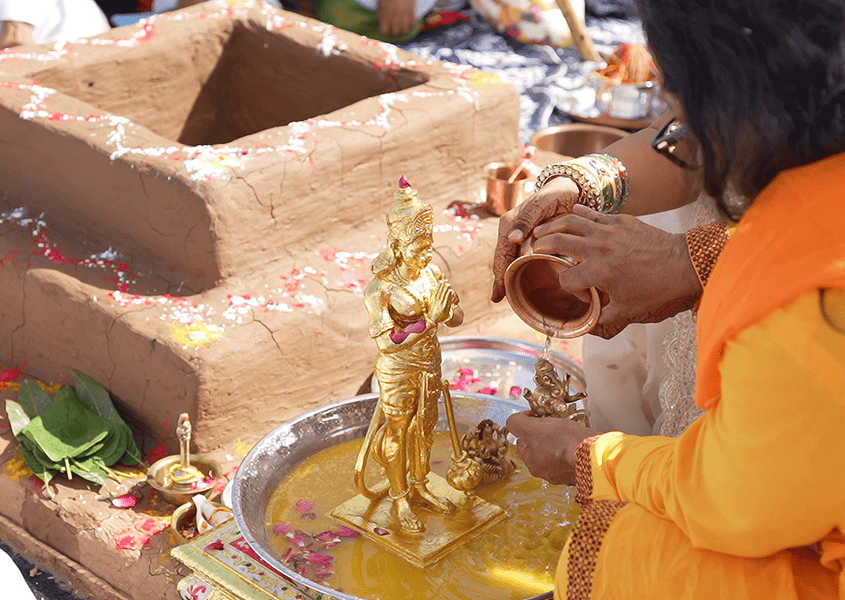
Twenty-five years ago, a divine feeling arose in the heart of Girish Ratilal Shah. In 2017, on the darshan of the World’s Tallest Pratimaji of Shrimad Rajchandraji at Shrimad Rajchandra Ashram Dharampur, that feeling turned into a firm resolve: to build a magnificent Hanumanji statue.
The tradition holds that when Prabhu Shrinathji arrived in Nathdwara, Shivji and Hanumanji accompanied Him as His protectors. Where Thakorji resides and Shivji is established, Hanumanji's presence too was felt as essential. And hence, Nathdwara was chosen. The site: Giriraj Parvat.
Chapter 2 . Divine Guidance
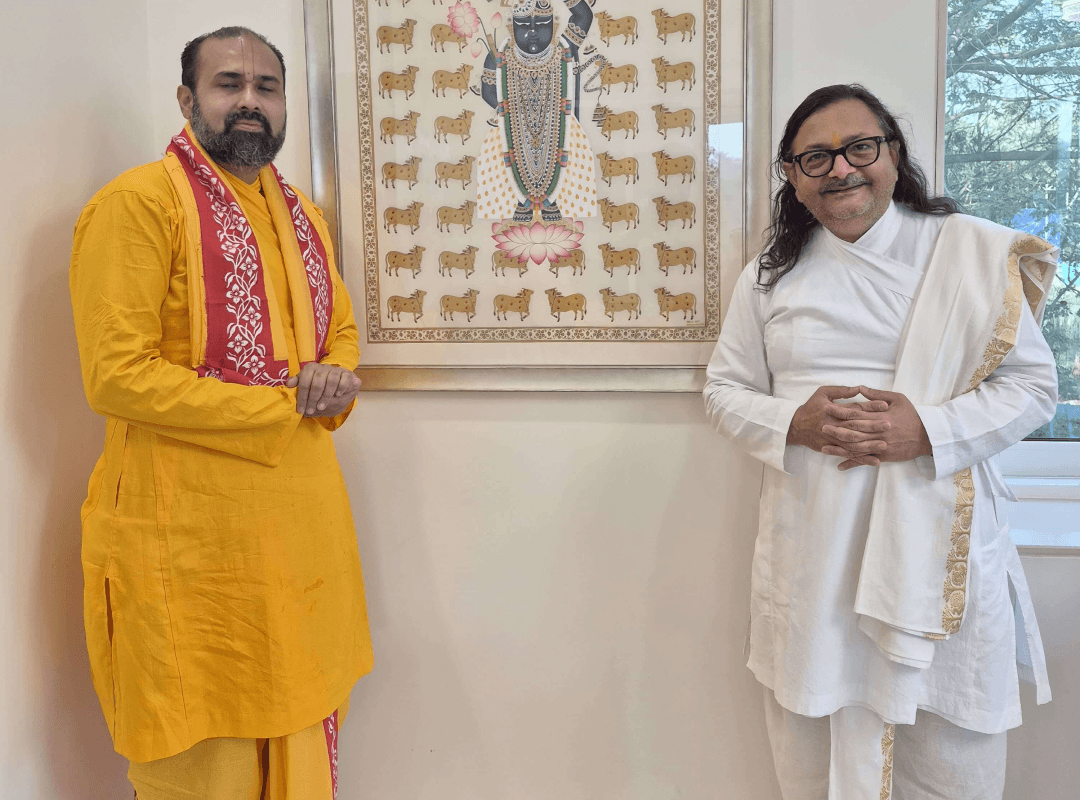
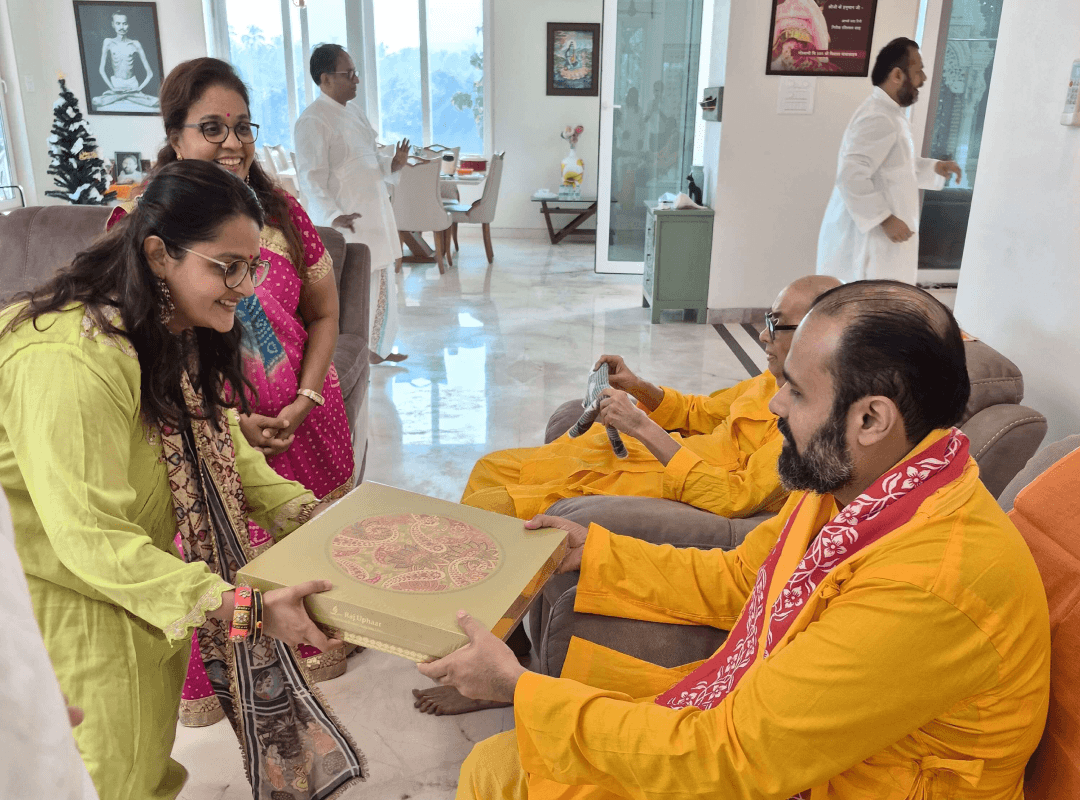
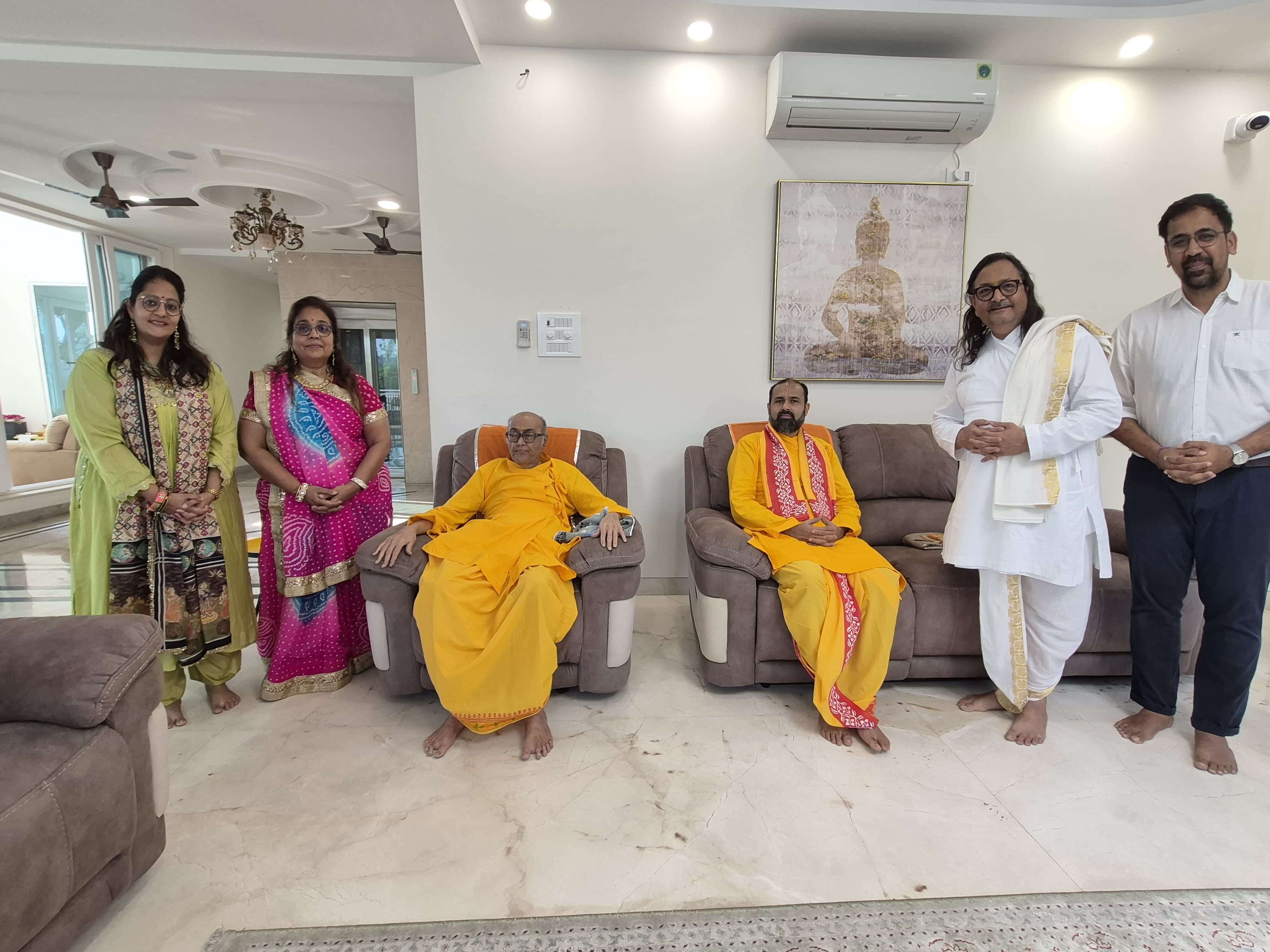
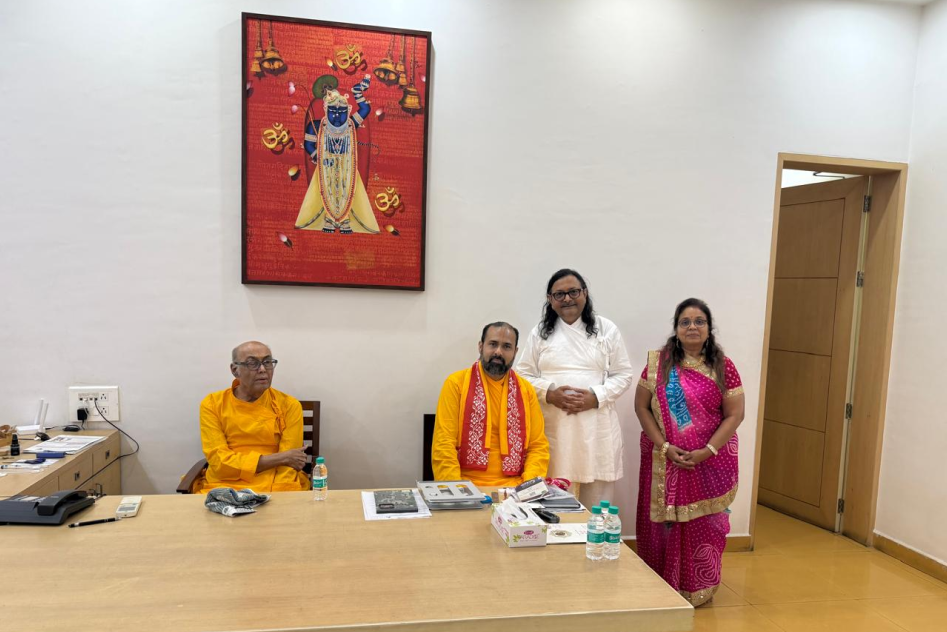
With the Ajna of Goswami Tilkayat Shri 108 Shri Indradamanji Maharajshri and the blessings of Goswami Shri 105 Shri Vishal Bawa Saheb, the project received its sacred mandate and moved forward.
Goswami Shri 105 Shri Vishal Bawa Saheb played a meaningful role in selecting the sacred site, and his assurance anchored the resolve: "Hanumanji is a protector here — move forward."
Chapter 3 . Guru's Grace
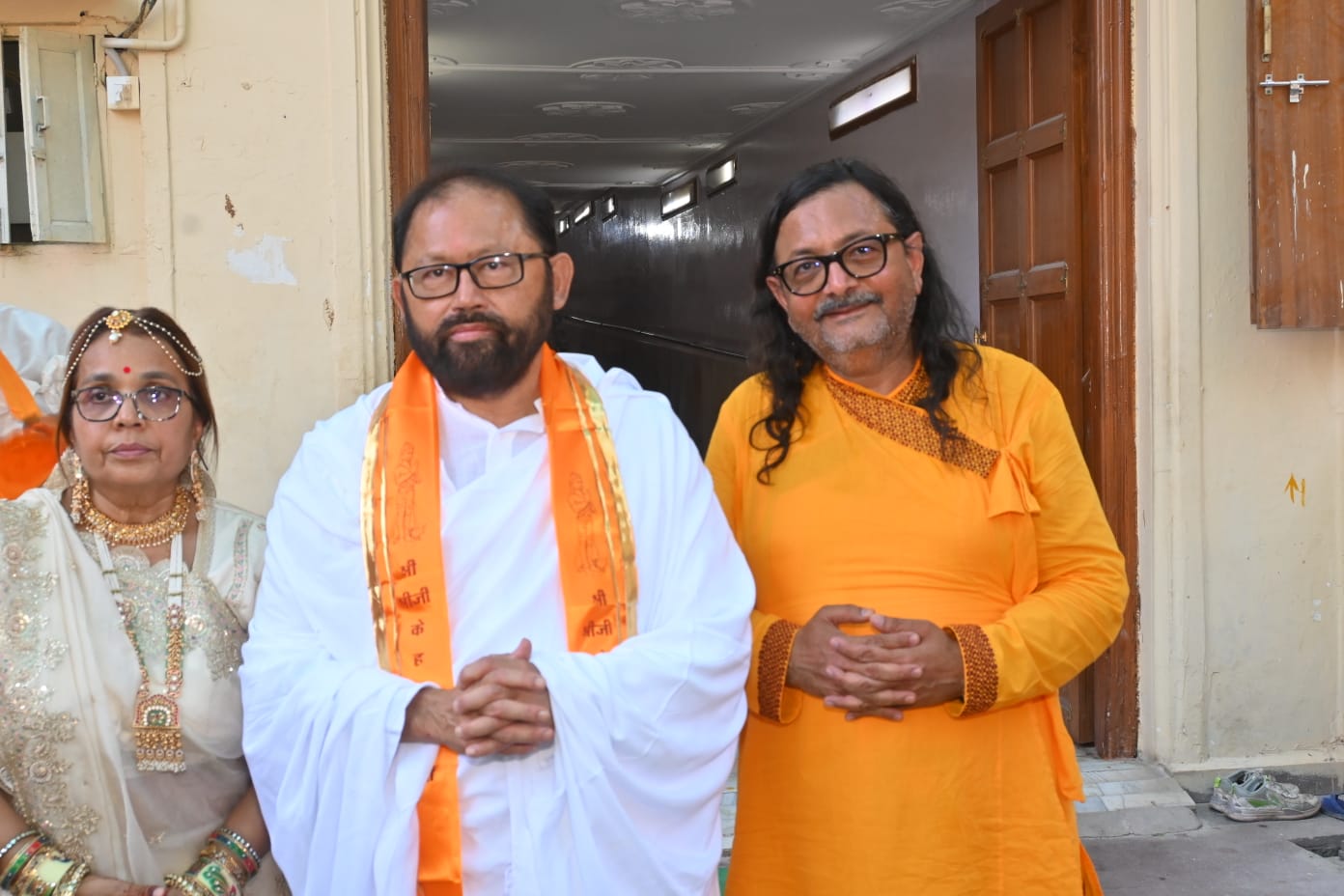
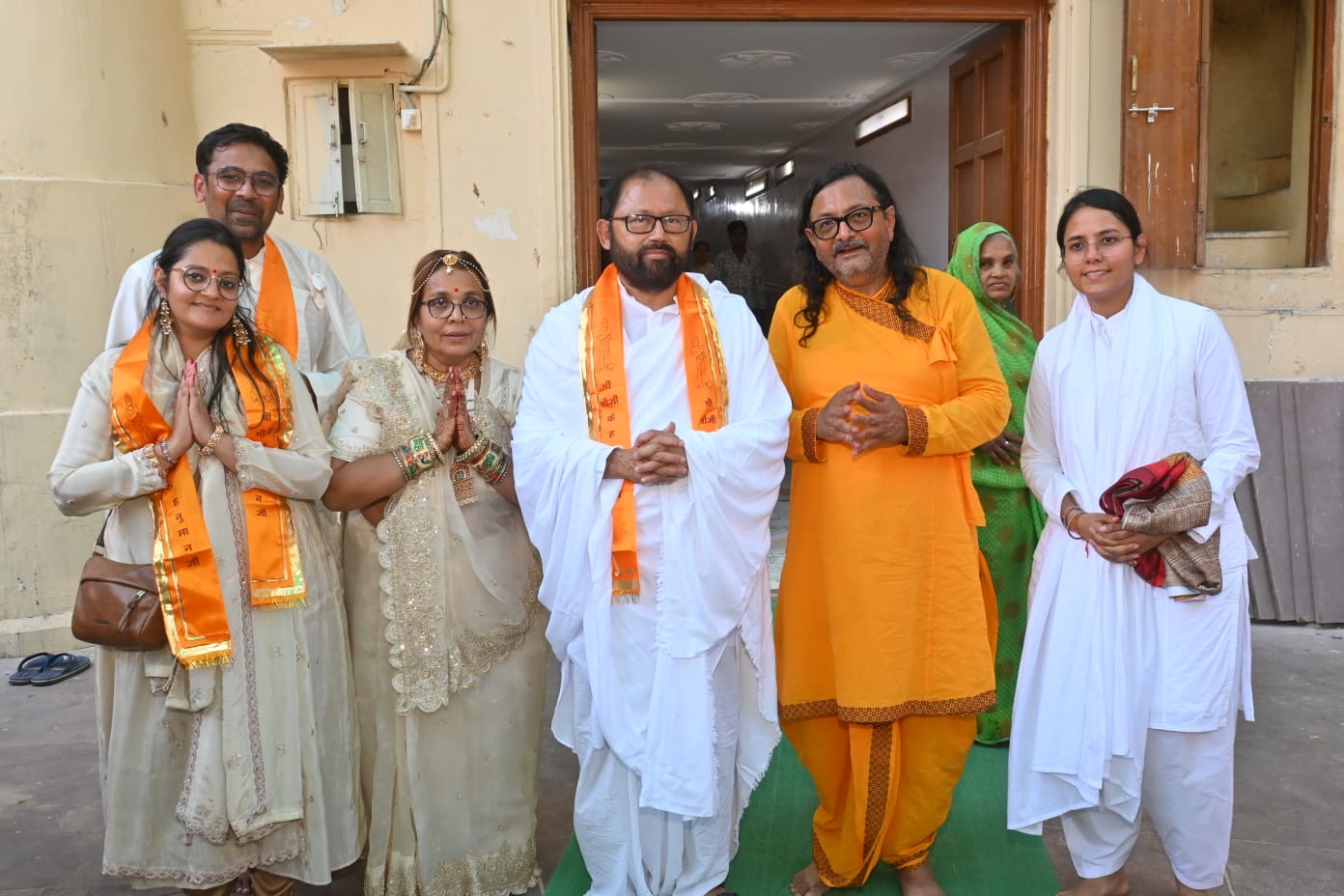
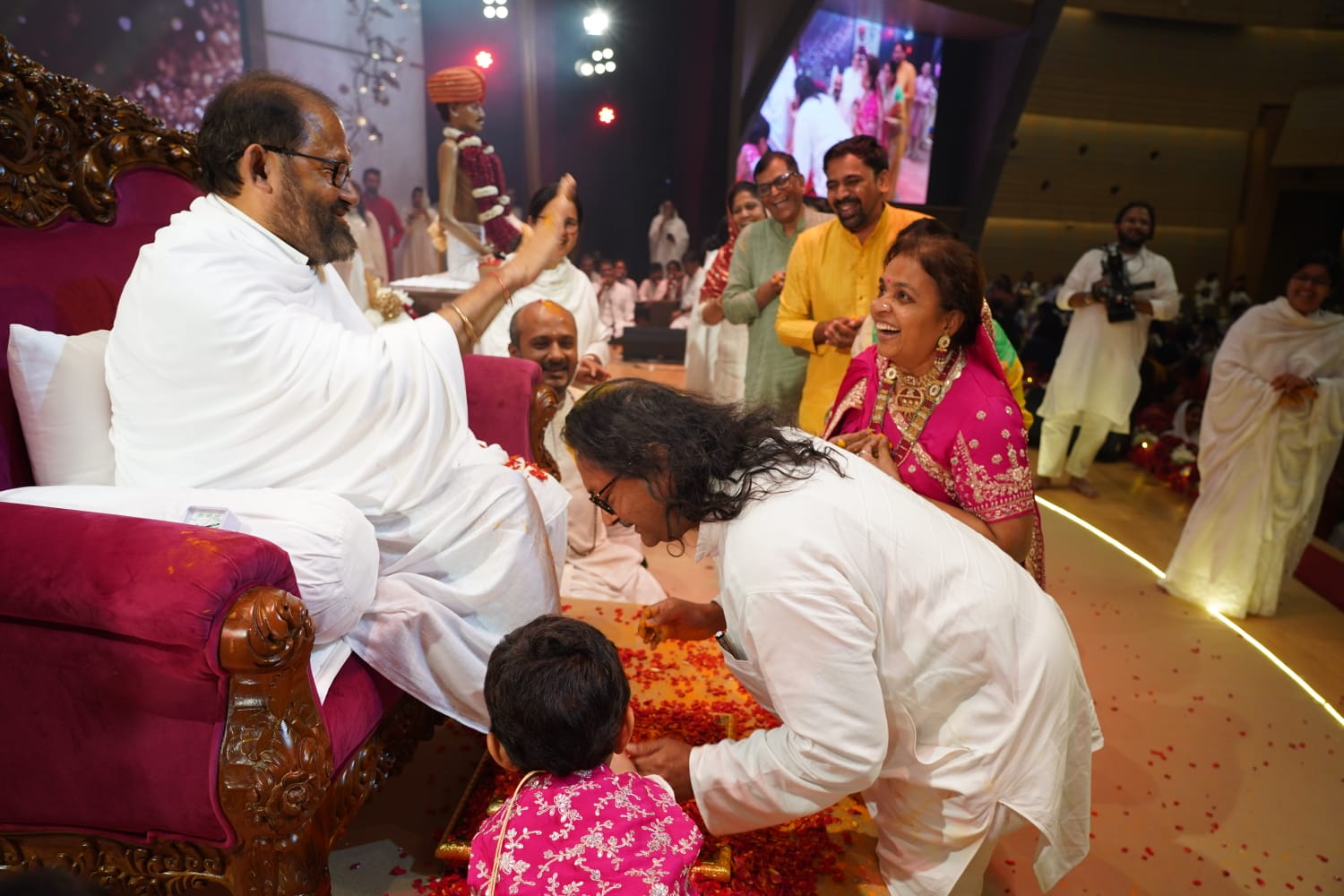
Pujya Gurudevshri Rakeshji
The spiritual strength to sustain this extraordinary endeavour over three years came from the satsangs of Pujya Gurudevshri Rakeshji, Founder of Shrimad Rajchandra Mission Dharampur. His spiritual discourses offered inspiration, inner strength and the conviction to persevere through challenges, keeping the vision alive at every step of this remarkable journey.
As Pujya Gurudevshri Rakeshji has illuminated the path of countless seekers through His wisdom and guidance, His satsangs became a source of strength for this extraordinary spiritual aspiration. The creation of Shriji Ke Hanumanji stands as a testament to what unwavering faith, sincere devotion and sustained effort can accomplish.
“This asaadharan manorath (extraordinary spiritual desire) of a sadharan bhakt (ordinary devotee) has been fulfilled through the blessings of Pujya Gurudevshri Rakeshji and the inner strength gained from His spiritual discourses (Satsangs).”
Chapter 4 . The Construction
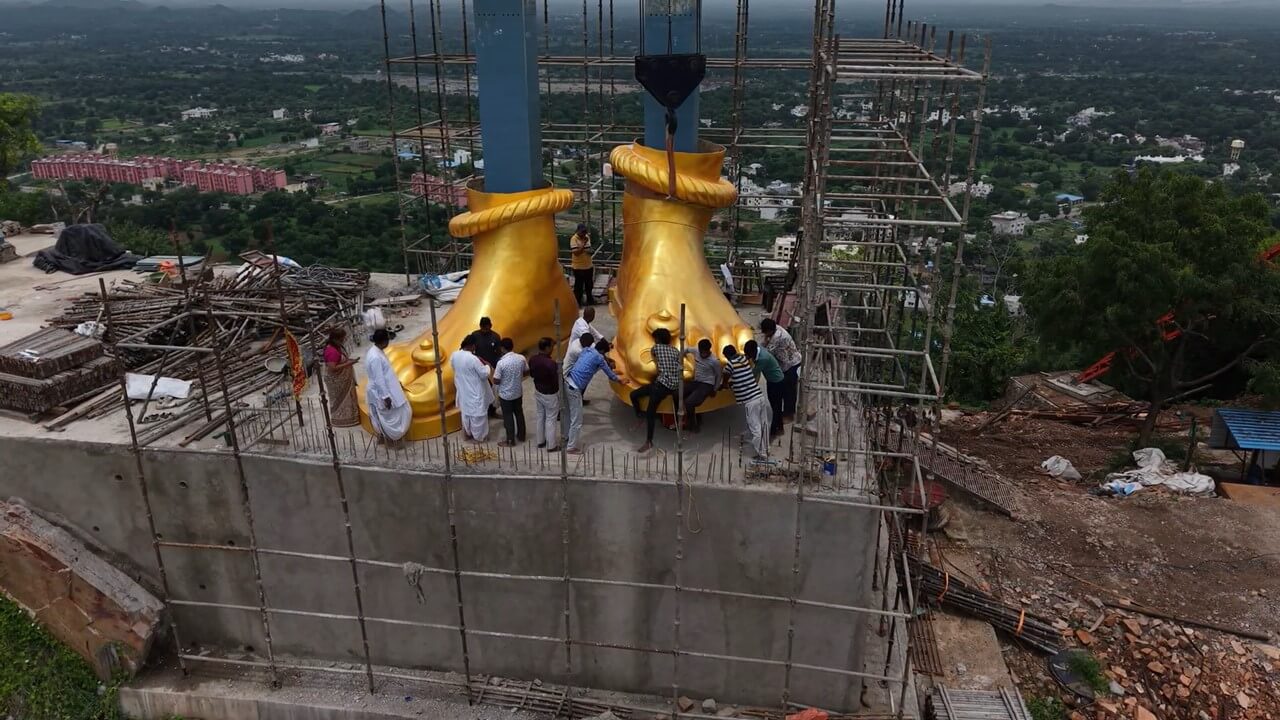
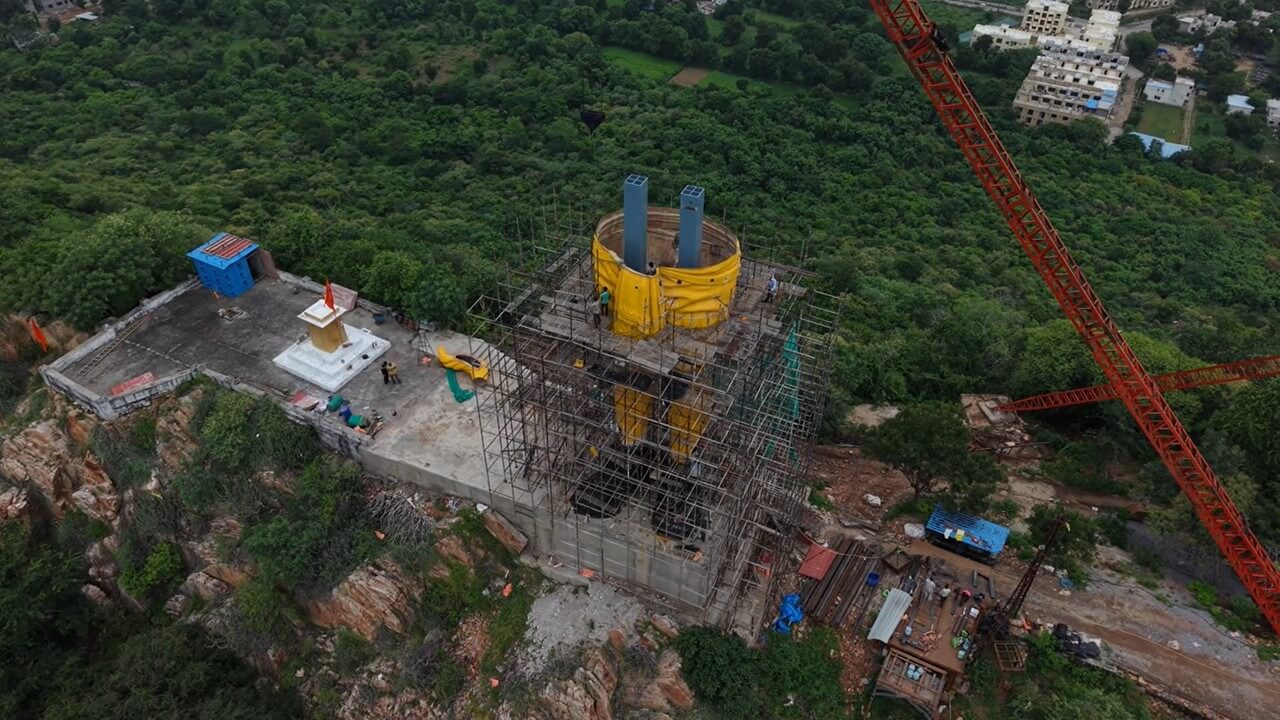
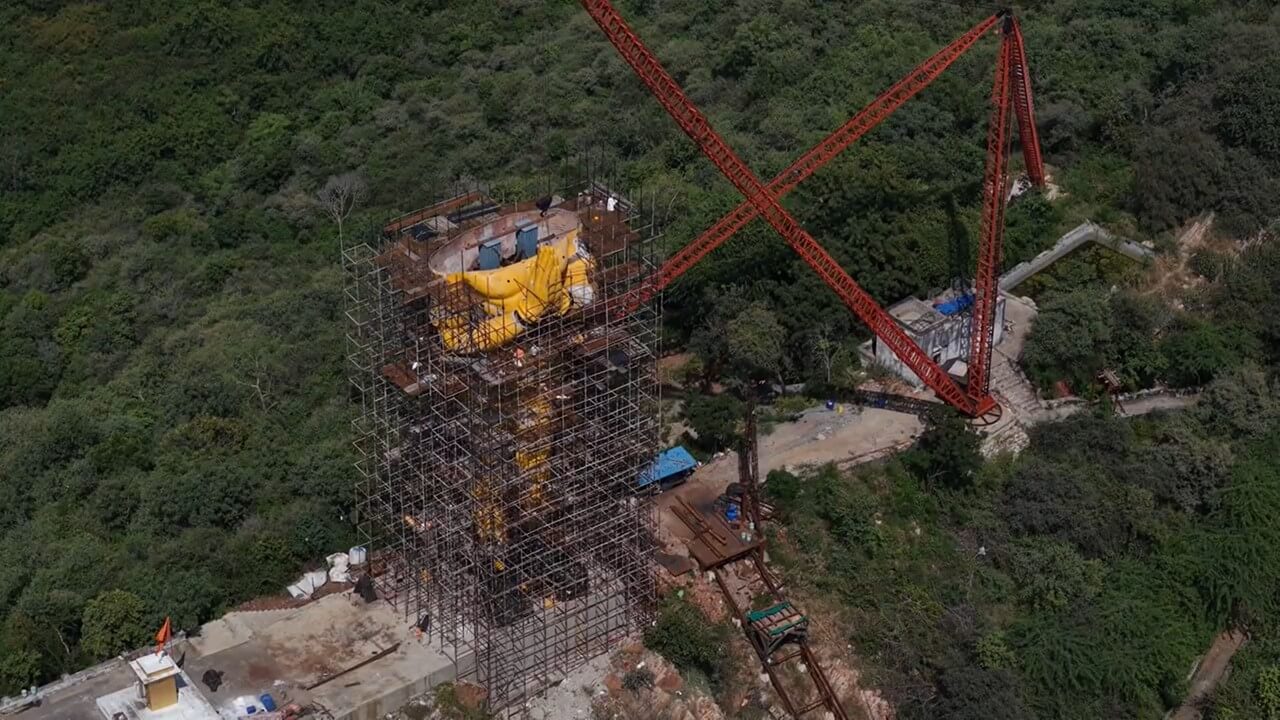
The site sits 500 feet above ground — atop Giriraj Parvat — with no road access and no vehicular route. For over a year and a half, the entire team walked up on foot every single day.
It began with building a platform — approximately 30×30 feet, 20 feet high — a robust concrete base designed to carry 150+ tonnes.
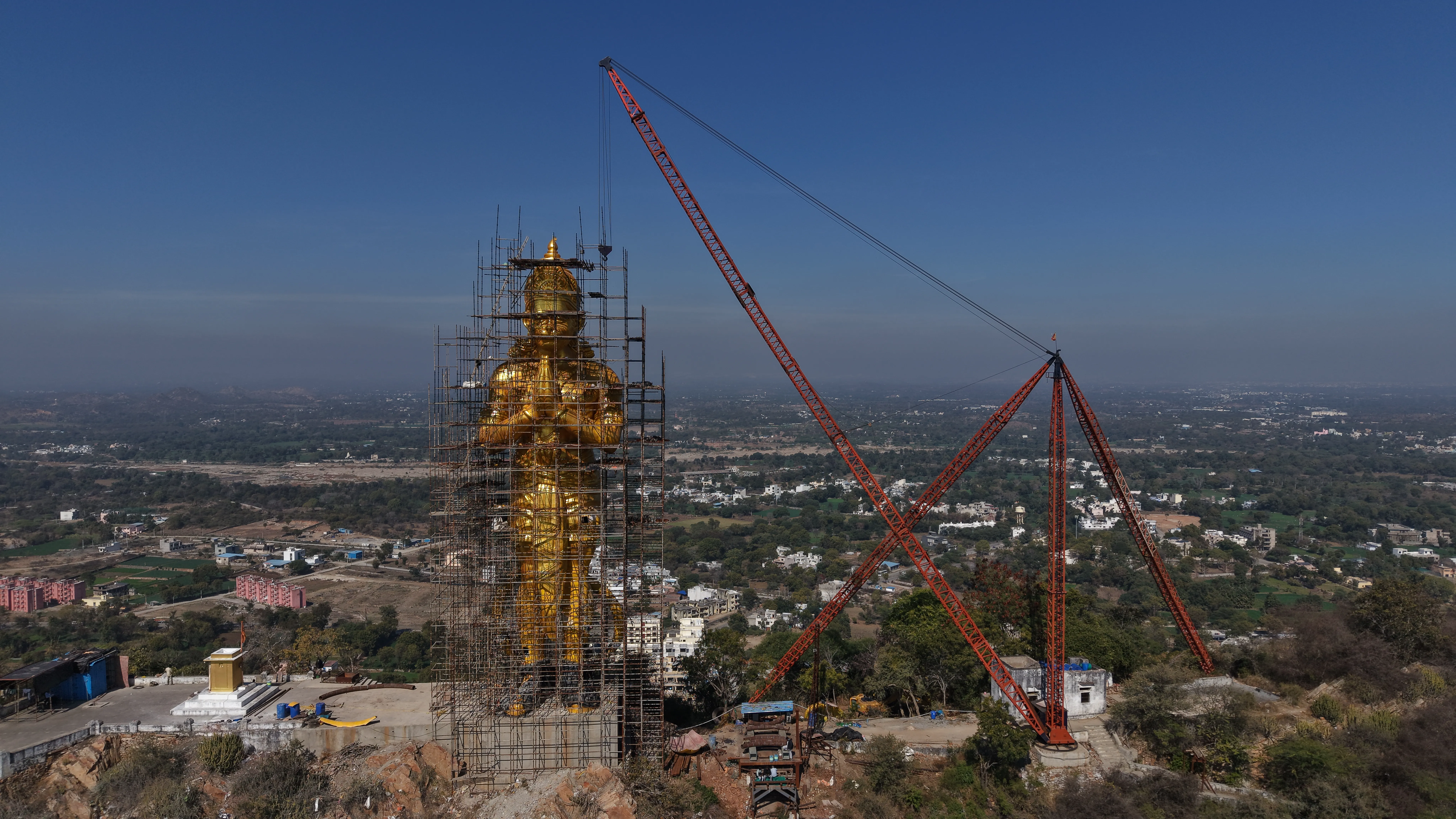
To carry materials uphill, a ropeway was built. Starting at 4–5 trips per day, it scaled to 20 trips daily. But each structural column weighed approximately 10,000 kg — the ropeway alone was not enough. A track and trolley system was engineered. Then came the Derik crane: disassembled at the base, carried piece by piece to the summit, and reassembled there.
Inside: 115 tonnes of steel. Outside: 43 tonnes of fibreglass. Special UV-resistant coating. Paint sourced from Thailand for long-term protection. Every weld, every column, every layer — executed with precision and longevity in mind.
Chapter 5 . The Statue
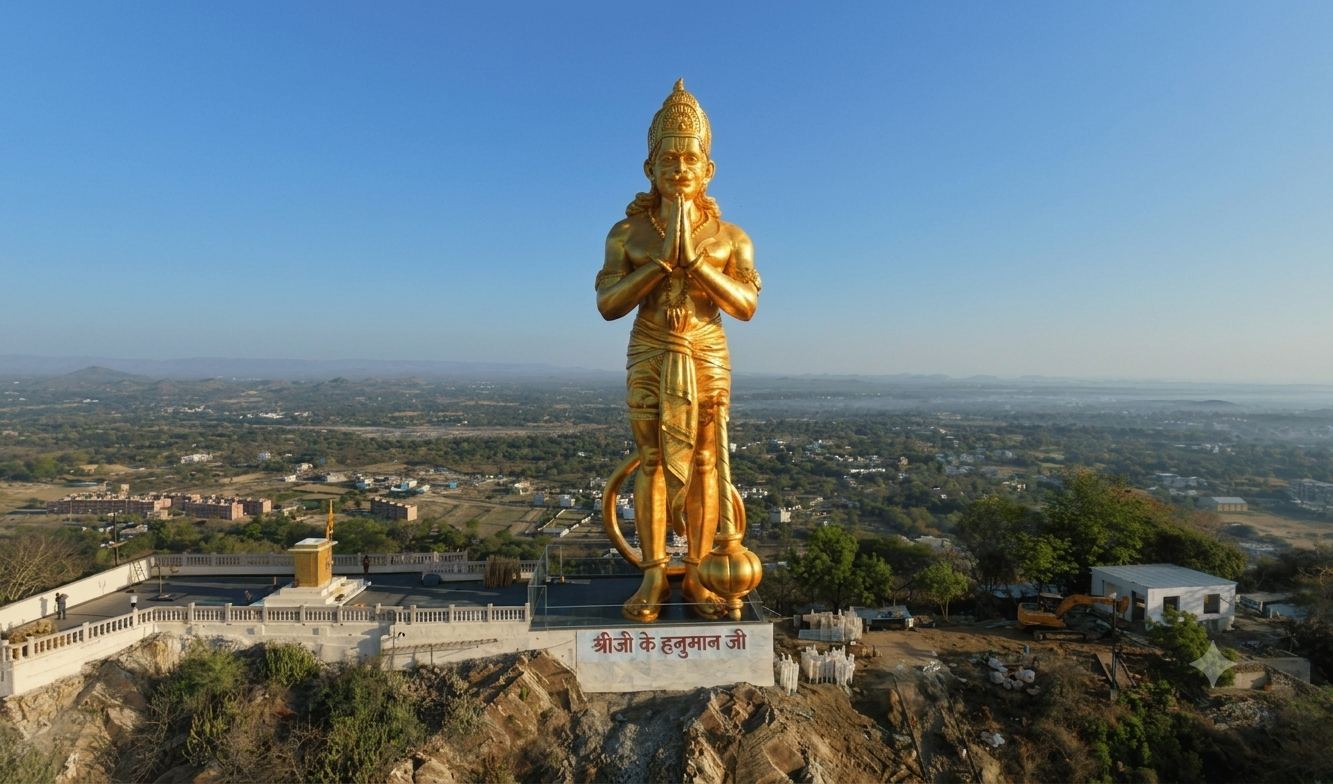
The 131-foot statue of Shri Shriji Ke Hanumanji depicts him as Sankatmochan — the Reliever of Troubles. He stands with hands folded in humility, his gaze turned toward the Shrinathji Temple below.
Visible from across Nathdwara, this is the world's tallest Hanuman statue atop a mountain peak with no road access — a landmark of devotion, engineering, and faith.